

Carbonization Temperature: The Key to Bamboo Charcoal Quality for Shisha
The ultimate quality divider for shisha charcoal is carbonization temperature — not appearance or cutting process. Two sticks both labelled "bamboo charcoal" can perform completely differently, and the root cause almost always comes down to this single metric.
Low-temperature charcoal (<600℃)
Low fixed carbon, high volatile residue and unstable moisture. Symptoms: slow ignition, heavy smoke and erratic heat. It irritates the throat and spoils shisha flavour in lounges. The low price buys a stream of complaints, and premium channels cannot sustain it.
Medium-high temperature charcoal (700–850℃)
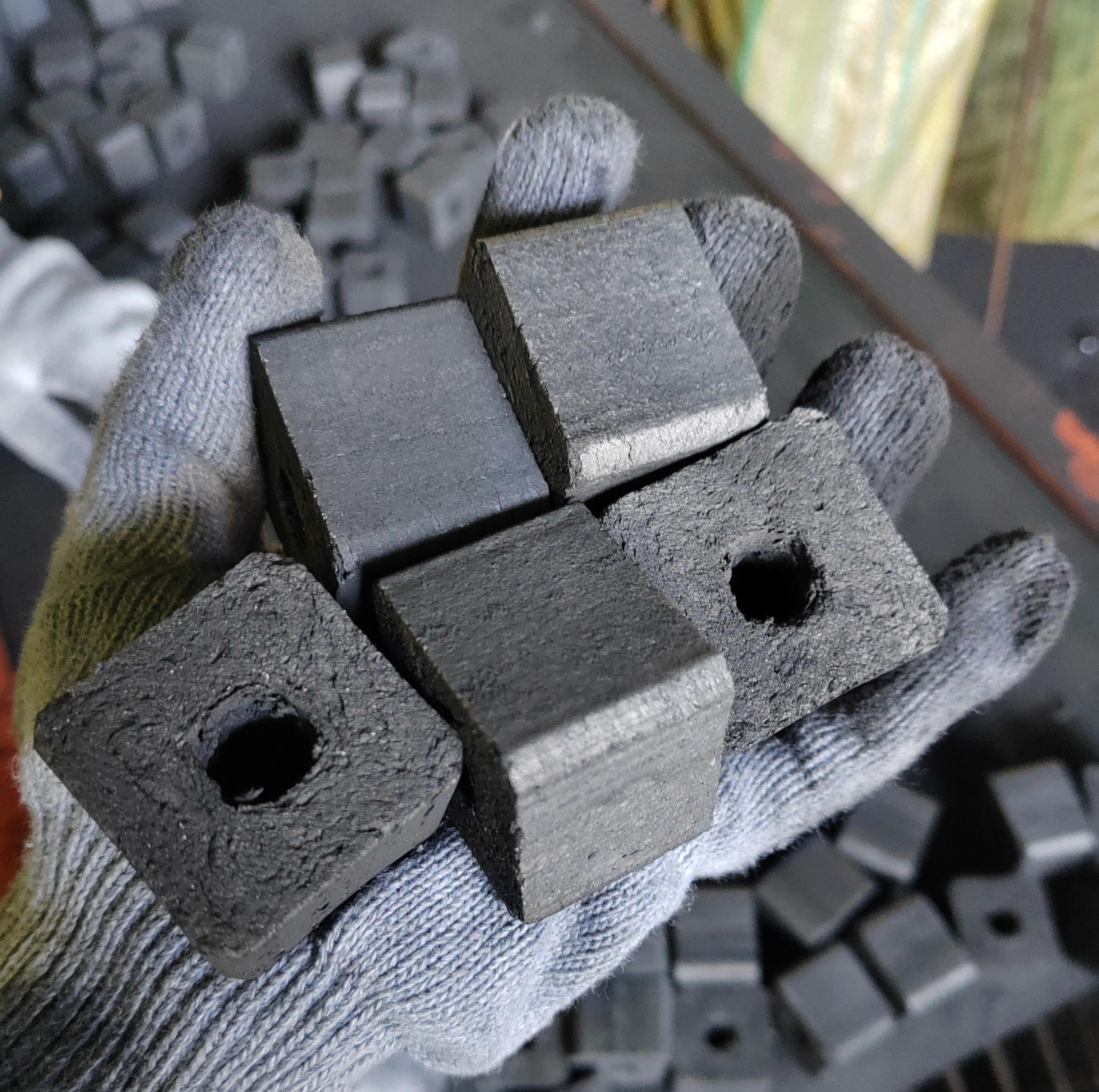
The sweet spot for shisha-grade bamboo charcoal. Volatile matter is fully released, fixed carbon meets standards, combustion is steady and long-lasting, ash stays compact, and smoke is clean. This is the standard that Middle Eastern premium lounges repeatedly reorder, and the carbonization range we focus on.
Ultra-high temperature charcoal (>900℃)
Extremely high heat output, yet brittle with heavy transit breakage. Energy and raw material costs soar, hurting overall value, so market availability is limited.
Sourcing checklist:
1. Request batch test reports and verify fixed carbon, ash and moisture — never judge by appearance alone;
2. Beware large-cross-section sticks (>3.8×3.8cm), often mixed with medium/low-temperature charcoal;
3. Confirm the carbonization temperature range in the contract to prevent spec downgrading during peak season.
Only tightly controlled, stable carbonization guarantees consistent burn performance across every batch — the real driver behind repeat orders from shisha customers.